Argentina wears black armbands to remember Antonio Rattín

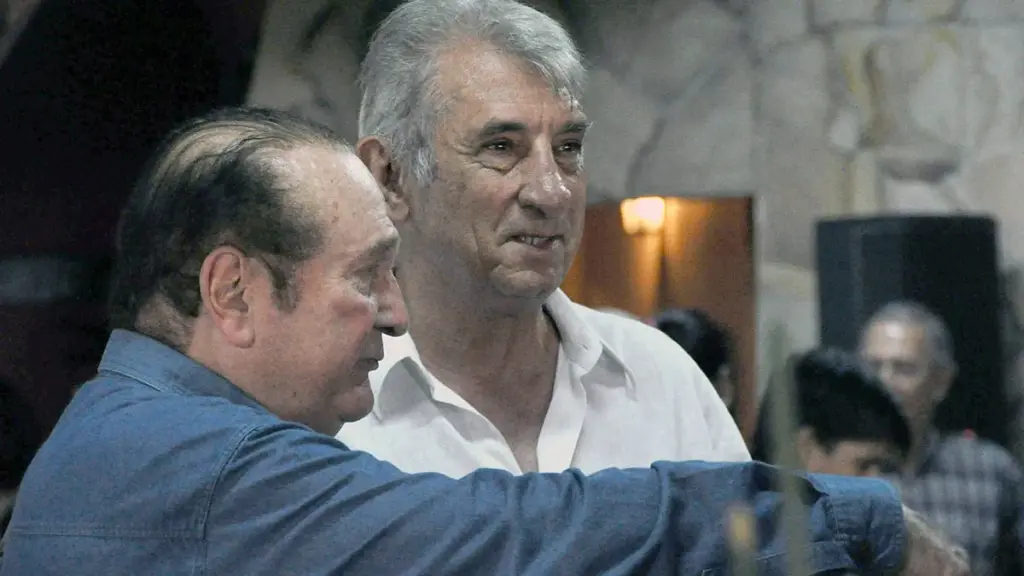
Argentina’s national football team is wearing black armbands during their World Cup quarterfinal match against Switzerland. This gesture of mourning honours the passing of Antonio Rattín, a former player whose impact on the sport was significant. The Argentine Football Association sought and received permission from FIFA for the team to wear the armbands, which are placed around the white sleeves of their primary jerseys for the Saturday night fixture.
Rattín, who died at the age of 89, reportedly suffered a stroke, according to his family. His former club, Boca Juniors, announced his death, mourning the loss of an individual they described as an idol and symbol of their institution. They extended their condolences to his family and loved ones.
Rattín’s Legacy and the Introduction of Cards
Rattín’s most enduring legacy in football is linked to the introduction of the yellow and red card system. This universal system, designed to prevent misinterpretations between referees and players from different countries, was implemented for the 1970 World Cup in Mexico and remains in use today, alongside technological advancements like Video Assistant Referees.
The catalyst for this change was an incident during the 1966 World Cup quarterfinal match between Argentina and England. Rattín, then captain of the Argentine team, was sent off by German referee Rudolf Kreitlein. Rattín claimed he did not understand the referee, who did not speak Spanish, and refused to leave the field for several minutes.
According to Rattín, he had been instructed by his manager, Juan Carlos Lorenzo, to request an interpreter if the referee appeared to be officiating poorly. Rattín stated that he asked for one because the referee was making calls that seemed to favour the opposing team, leading to his dismissal.
After eventually being escorted off the pitch, Rattín sat on a red carpet designated for the Queen and crumpled an English pennant as he departed. He later recounted that English fans threw chocolates and beer cans at him during this incident, which is considered an early flashpoint in the long-standing sporting rivalry between England and Argentina.
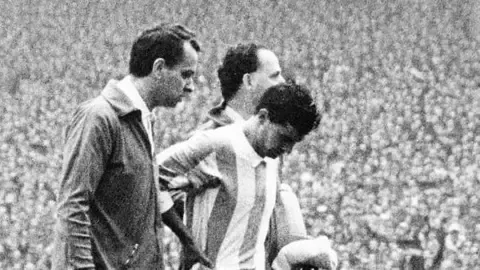
The aftermath of this match saw England manager Alf Ramsey famously refer to the Argentine team as “animals.” England won the game 1-0 and went on to secure their only World Cup tournament victory that year. The controversy surrounding Rattín’s sending-off and his subsequent refusal to leave the field prompted FIFA to develop the yellow and red card procedure.
A Distinguished Career and Post-Playing Life
Rattín spent his entire professional playing career with Boca Juniors, a club based in Buenos Aires. He played for the club for 14 years, making 382 appearances between 1956 and 1970 and scoring 28 goals. During his time with Boca Juniors, he won four league titles and reached the 1963 Copa Libertadores final.
He represented the Argentina national team from 1959 to 1969, participating in the 1962 and 1966 World Cups. While his controversial dismissal in 1966 is widely remembered, his contributions to Argentine football were extensive.
Following his playing career, Rattín briefly coached Boca Juniors before transitioning into politics. He served as a member of the National Chamber of Deputies from 2001 to 2005, becoming the first former professional footballer to hold a position in the legislative body.
Read Also
Source: eu.usatoday.com

