Nations Championship first leg concludes with mixed results and officiating concerns

First Leg Highlights and Standings
The initial phase of the Nations Championship has concluded, with South Africa and France leading their respective hemisphere tables. Both New Zealand and the Springboks achieved maximum points during this period. Conversely, Fiji and Italy did not secure any points across their three matches.
Overall, Southern Hemisphere teams demonstrated a slight advantage over their Northern Hemisphere counterparts, scoring more points and tries over the 18-game series. However, the competition has been relatively balanced, with both hemispheres winning an equal percentage of their matches.
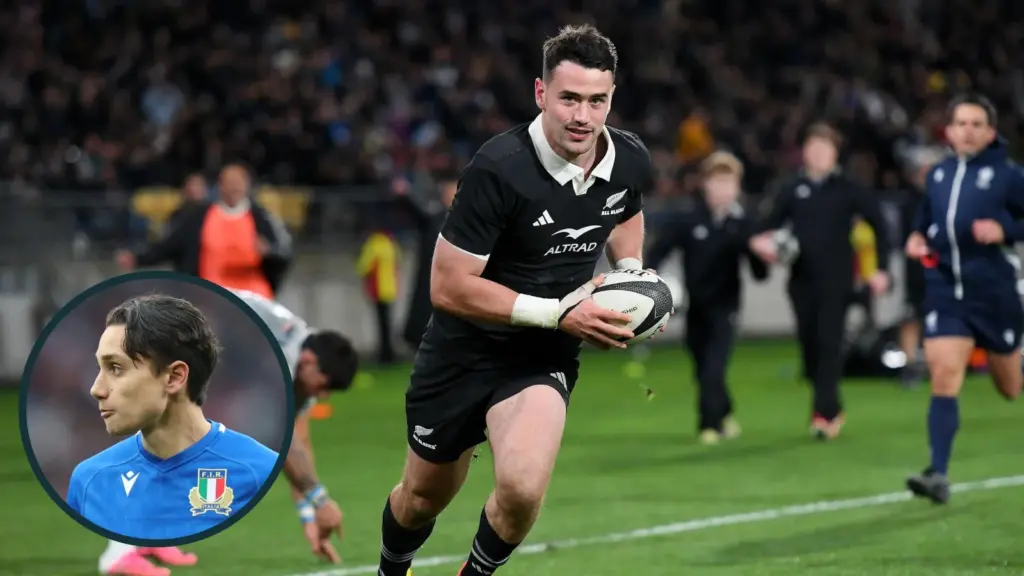
Individual performances stood out, with France scrum-half Maxime Lucu leading in points with 37, including two tries against Japan. Will Jordan of the All Blacks leads in tries with six, setting a new record for his national team. Italy’s Ross Vintcent recorded the most tackles, while Matthieu Jalibert of France made the most metres. Argentina’s Joaquín Oviedo led in carries, and Jack van Poortvliet of England registered the most assists with four.
In team statistics, South Africa scored 130 points across their three matches, narrowly surpassing England. New Zealand secured 121 points. Despite a significant points differential, Italy topped the tackle chart. New Zealand also excelled in open play, making 1,767 metres with the ball. Fiji led in offloads with 50, significantly more than their closest rivals.
Officiating and Game Flow Concerns
Despite the new format, recurring issues with officiating and game flow have been noted. Incidents such as Luke Jacobson’s ruck clear-out during the New Zealand versus Ireland match, which resulted in a yellow card despite appearing to warrant a red, highlighted inconsistencies. Similarly, deliberate knock-ons by players like Quinn Tupaea went uncarded, while similar actions in other games led to dismissals.
A notable instance involved Argentina’s non-try in the final moments of their match against England. The decision-making process, involving the Television Match Official (TMO), extended the game significantly. The prolonged review, which explored multiple slow-motion angles, ultimately led to a decision that could have been interpreted in various ways, from no try to a penalty try, which would have resulted in a 31-31 draw.
The extended TMO process meant that an 80-minute game stretched to approximately two and a quarter hours. This lengthy review reduced the impact of the on-field drama, such as Bautista Delguy’s dive and Henry Slade’s tackle, by focusing on minute details of the law book.
Proposed Changes and Tournament Logistics
Suggestions for improving the game include limiting TMO responsibilities to head injuries or serious foul play, leaving other decisions to the on-field referee. Another idea is to modify penalties for less serious one-handed knock-ons or failed intercepts, offering the opposing side a scrum or a tap penalty 20 metres upfield instead of a yellow card. It has also been suggested that only captains should be allowed to communicate with referees. Additionally, players initiating head contact could receive a 20-minute orange card to clarify red or yellow card decisions.
There is also a call for authorities to address the prevalence of kicks to the corner followed by predictable lineout drives. Tournament promoters are encouraged to demand a more proactive approach from national teams in engaging with the media during match weeks.
Logistically, the new tournament format has presented challenges for teams, as noted by England’s Ben Earl. The structure also means that the two current unbeaten sides, both from the same hemisphere, cannot meet in the final. Attendance figures for the first leg show a total of 641,550 people across 18 matches, averaging 35,642 per match. The highest attendance was 55,125 for the Fiji versus Scotland match, which was hosted at The Scottish Gas Murrayfield, setting a new national record for Fiji.
Read Also
- Scottie Scheffler defends Bryson DeChambeau amid penalty discussion at The Open
- Nations Championship Team of the Month features Springboks, All Blacks, and Japanese bolter
- Paris judge authorised night-time doping tests for Vingegaard and Pogacar
- George Russell expresses disappointment after Belgian Grand Prix incident
Source: theguardian.com

