Fifa assessing reports after Argentina players display Falklands banner

Fifa is currently evaluating match reports following an incident where Argentina players displayed a banner supporting their country’s claim to the Falkland Islands. This occurred after their World Cup semi-final victory against England. The defending world champions secured a 2-1 win in Atlanta, advancing to the final against Spain.
Following the match, Argentina players held up a banner that read “Las Malvinas son Argentinas,” which translates to “The Falklands are Argentine.” The Falkland Islands are a British overseas territory in the south-west Atlantic Ocean, and their sovereignty remains a point of contention between the United Kingdom and Argentina.
A Fifa spokesperson confirmed that the independent disciplinary committee is reviewing the match reports and relevant circumstances. This assessment will determine any potential steps based on the Fifa disciplinary code. In 2014, Argentina’s football association was fined for displaying a similar banner before a friendly match, with Fifa stating at the time that such gestures breached rules on political action and team misconduct.
Diplomatic and Political Reactions
Downing Street has supported calls for Fifa to investigate the incident. The prime minister’s official spokesperson stated that while the World Cup might not belong to the UK, the Falkland Islands definitively do, reaffirming the UK’s commitment to the islands.
Argentina’s President Javier Milei reportedly described the players’ actions as “understandable” and “valid.” However, he also clarified that events on the pitch are separate from diplomatic efforts. He emphasised that while the Malvinas are Argentine, their recovery would be pursued through diplomatic channels and intelligent action.
The government of the Falkland Islands expressed disappointment regarding the banner and hopes Fifa will sanction such behaviour in accordance with its regulations. They also stressed the importance of keeping politics out of sport. Peter Kyle, the business and trade secretary, echoed these sentiments, calling for a thorough investigation by Fifa and contrasting the professionalism of the England team with the actions of the Argentine team.
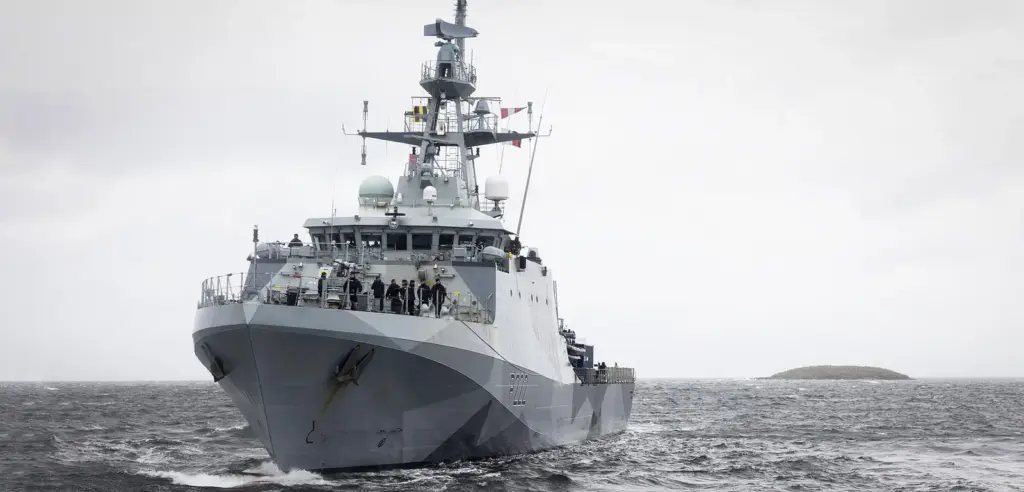
The display of the banner coincided with heightened Anglo-Argentine tensions, which were also influenced by the routine passage of HMS Medway, a Royal Navy Offshore Patrol Vessel, to a Chilean port. HMS Medway has served as the permanently-deployed Falkland Islands guard ship since January 2026, undertaking tasks such as fishery protection, sovereignty patrols, and maritime security around the islands.
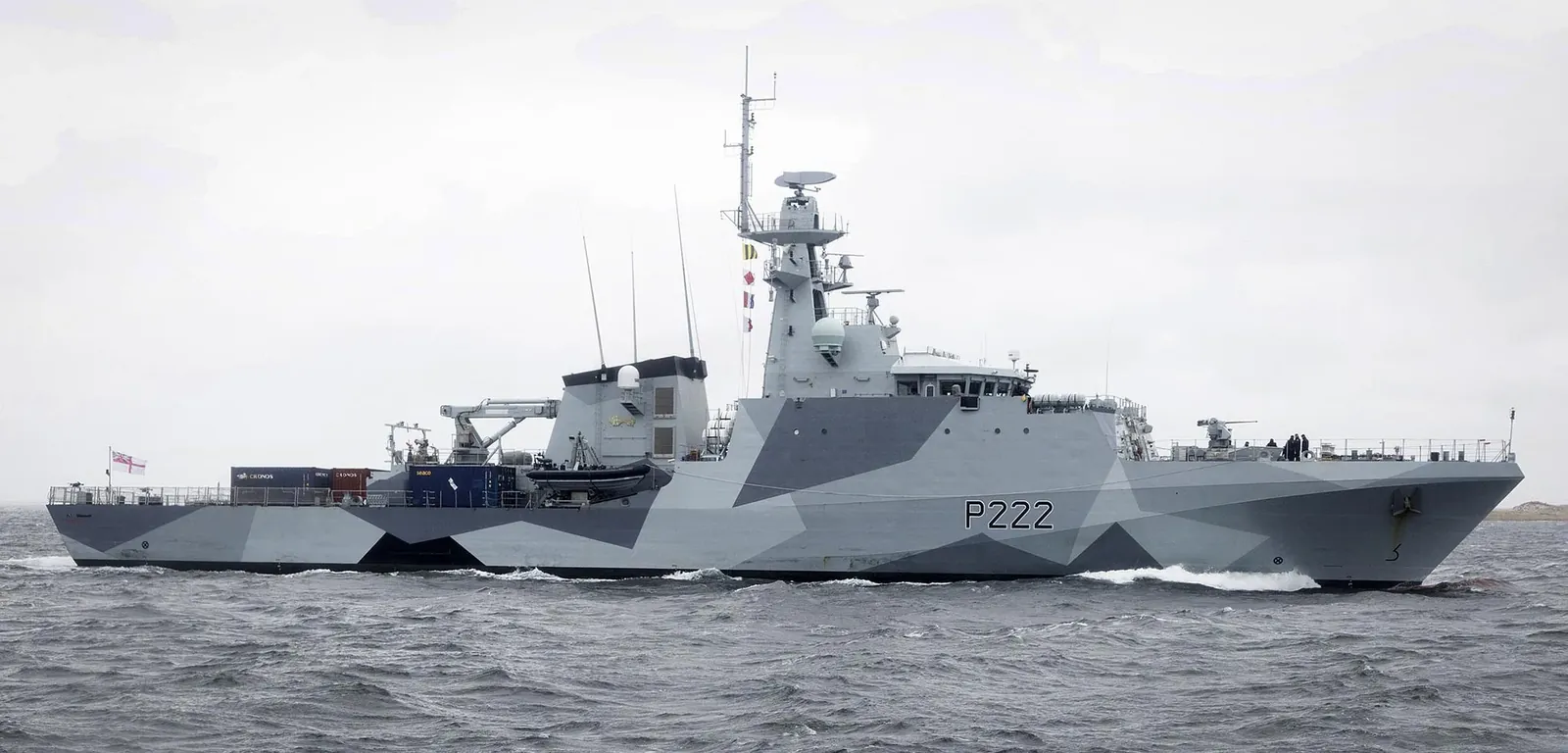
The transit in question occurred at the beginning of the month. After a humanitarian mission to Tristan da Cunha, Medway sailed from the Falklands along the Argentine coast and through to the Chilean port of Punta Arenas, where it berthed on 5 July. This marked its first call at a Chilean port, remaining until the 8th.
Argentina’s foreign minister, Pablo Quirno, lodged a formal protest with the British embassy on 13 July, characterising the movement as “unconsulted and illegal” and a military incursion into waters under Argentine jurisdiction. This was viewed as a breach of confidence-building measures established in the early 1990s.
However, sources from the British Foreign Office indicated that the Argentine foreign ministry, defence ministry, and joint chiefs of staff were informed in advance of the ship’s departure for Chile. Initially, Argentina’s foreign ministry stated that the vessel had been tracked and communications had occurred through established bilateral mechanisms, suggesting no breach requiring escalation. The political context, however, subsequently shifted.
Historical Context and Potential Consequences
The Falklands, located 300 miles off Argentina’s east coast, were invaded by Argentina in 1982. The conflict, which lasted 74 days from April to June 1982, resulted in the deaths of 649 Argentine and 255 British servicemen, along with three islanders.
In 2013, the residents of the Falkland Islands participated in a referendum, with an overwhelming majority voting to remain a UK overseas territory. Out of 1,517 votes cast, 1,513 were in favour of remaining a UK territory, with only three votes against.
While there is no indication that Argentina will forfeit their place in the World Cup final, Fifa typically takes disciplinary action for breaches of regulations. The severity of the incident may be amplified due to its occurrence during a World Cup match between the two nations. There are precedents for Fifa banning players for similar political messages, such as the two-match suspension given to South Korea midfielder Park Jong-woo after the 2012 Olympic Games bronze medal match for displaying a sign related to a territorial dispute.
Liberal Democrat leader Ed Davey has called for the Argentina players involved in holding the banner to be suspended for the upcoming final against Spain. He referenced a Uefa ban on Spain players Alvaro Morata and Rodri for one game after they chanted “Gibraltar is Spanish” during Euro 2024 celebrations.
The strategic landscape in the South Atlantic has also seen shifts, with President Milei’s alignment with the US deepening. An “integrated naval base” is under construction at Ushuaia, on the Beagle Channel. While Buenos Aires asserts it is an Argentine facility without special concessions, a 2025 emergency decree authorising US forces to participate in Argentine naval exercises, including at Ushuaia, has contributed to the perception of a growing US-Argentine strategic presence near the Falklands.
The Royal Navy’s HMS Medway, while a constabulary vessel, is not intended as a significant part of the military deterrent. The primary defence of the Falklands relies on the Mount Pleasant garrison, the resident RAF Typhoon detachment, and a ground-based air defence missile battery. The ability to reinforce the islands from the UK has historically been the “big stick” in defence strategy.
The Falklands War remains a significant and sensitive historical event, and the use of the “Las Malvinas son argentinas” slogan is deeply ingrained in Argentine national identity. The Falkland Islands were British before Argentina was founded as a state, and the claim based on proximity is not supported by international law or precedent.
Fifa’s independent disciplinary committee is currently assessing the match reports and considering the relevant circumstances before deciding on potential further steps.
Read Also
Source: bbc.com

